Key Takeaways
Gym confidence can be built gradually, whatever your age or starting point. I find that a familiar plan, suitable support and realistic expectations make the process feel much less daunting.
- Start with goals that relate to daily life, such as easier stairs, steadier balance or carrying groceries.
- Choose a clean, welcoming facility where staff explain equipment patiently.
- Begin with manageable exercise, gentle progress and enough recovery time.
- Ask a healthcare professional or qualified trainer about adapting movement to your circumstances.
- Measure progress through strength, comfort and independence, not body weight alone.
Understand what gym confidence means at any age
Gym confidence is not a personality trait that some people have and others lack. I see it as a mixture of feeling safe, knowing what to do and trusting myself to begin at an appropriate level. That combination can be developed through small, repeatable experiences.
Common fears that keep older adults from exercising
Many older adults worry about looking inexperienced, using equipment incorrectly, aggravating an old problem or being judged by younger gym members. Those concerns are understandable, particularly after a long break from exercise. I usually suggest naming the specific fear rather than treating “the gym” as one large, intimidating problem; each concern can then be addressed separately.
A first visit can be purely observational. I might walk through the facility, ask where the quieter areas are and note whether the equipment is clearly explained. There is no rule saying that the first visit has to include a demanding workout.
How confidence affects motivation and consistency
When I feel uncertain, even a small decision—what to wear, where to start or how long to stay—can become a reason to postpone exercise. A simple routine reduces those decisions and makes returning easier. Confidence often follows action rather than arriving beforehand.
I encourage a gentle definition of success: attending, completing the planned movement and leaving feeling capable. Repeating that experience helps replace vague worry with useful familiarity. Over time, confidence grows from evidence that I can handle the next small step.
The difference between fitness ability and gym familiarity
Someone may be strong enough to walk, lift and balance well but still feel lost among cable machines and adjustable benches. Conversely, a regular gym user may know the layout without having the right fitness level for every exercise. These are separate skills, so I avoid judging physical ability by how comfortable someone appears in the room.
Gym familiarity can be learned through an orientation, a written plan or a few supervised sessions. I can also practise basic movements at home before using equipment in public. Knowing the setting is a practical skill, not a test of age or worth.
When self-doubt may signal a need for professional support
Self-doubt is common, but persistent fear, uncertainty about a health concern or confusion about how to move safely is a good reason to seek support. I would rather pause and ask a qualified professional than push through a problem simply to appear confident. A healthcare professional can discuss whether planned activity is appropriate, while a qualified trainer can help with technique and modifications.
Support should feel respectful and specific. I look for explanations in plain language, opportunities to ask questions and a willingness to adjust the session rather than pressure to do more.
Choose a welcoming gym and the right support
The right environment can make gym confidence much easier to build. I look beyond glossy equipment and consider whether the people, layout and teaching style suit a beginner. A short visit before joining can reveal more than a promotional description.
What to look for in an age-friendly facility
I look for clear walkways, stable seating, accessible change rooms, good lighting and equipment that can be adjusted without excessive force. Staff should greet members without making assumptions about their age or ability. It also helps when the facility has space for balance work, stretching and slower-paced exercise rather than focusing only on intense training.
Noise and crowding matter as well. I ask whether there are quieter periods and whether I can try the equipment before committing. A comfortable setting supports regular attendance because I spend less energy managing the environment.
Questions to ask about trainers and beginner programs
Before booking a session, I ask how the trainer works with older adults and people returning after a break. I want to know whether the first appointment includes a conversation about goals, previous experience and any movement limitations. I also ask how the trainer changes an exercise if it causes discomfort or feels too difficult.
Useful questions include:
- Is the first session supervised from start to finish?
- Can the plan be adjusted for balance, joint comfort or limited mobility?
- How will effort and progress be explained?
- What happens if I need to miss a session or reduce the workload?
The answers tell me whether the program is genuinely flexible. I am looking for patient instruction, not promises of rapid transformation.
How small-group classes can reduce gym anxiety
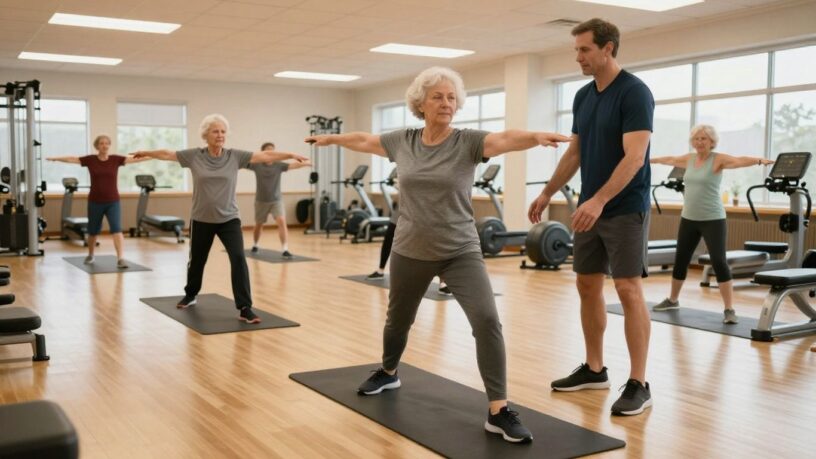
A small class can provide structure without the intensity of a busy general session. I know where to stand, when the next exercise begins and whom to ask when I am unsure. Seeing familiar faces can also make the gym feel more like a community than an unfamiliar room.
I still check that the instructor offers alternatives and watches technique. A class labelled “beginner” can vary considerably, so I ask about pace, class size and the type of movements included before attending.
When home-based or community exercise options may be better
A gym is not the only valid place to become stronger. If travel, cost, sensory discomfort or self-consciousness makes attendance unrealistic, I may begin with walking, a community class or a carefully chosen home routine. Starting somewhere manageable is more useful than choosing an ideal arrangement I cannot sustain.
Community centres, aquatic facilities and local walking groups may offer social support with less gym-related pressure. I can build confidence there and decide later whether a commercial gym adds anything useful.
Build a safe and manageable starting routine
I prefer a starting routine that leaves room to learn. It should be simple enough to remember, light enough to recover from and relevant to the movements I want to manage in daily life. A plan that feels almost too easy at first can be a sensible foundation.
How to set realistic strength and mobility goals
I begin with function rather than appearance. My goals might include standing from a chair more comfortably, reaching a shelf, carrying a light bag or feeling steadier on a walk. These are clear, meaningful and easier to connect with than a general wish to “get fit”.
I write down what success would look like without attaching an arbitrary deadline. If a goal depends on pain, balance or a health condition, I discuss it with an appropriate professional before changing my routine.
Choosing exercises that match your current fitness level
I choose movements I can perform with control and comfortable breathing. That might mean supported sit-to-stands, gentle pulling and pushing exercises, walking or mobility work before progressing to more resistance. The starting point should reflect what I can do now, not what I could do decades ago.
I also distinguish muscle effort from sharp, worsening or unfamiliar pain. When I am unsure, I stop and seek guidance rather than trying to prove that I can continue.
Why gradual progress improves confidence
Small increases allow me to notice how my body responds. I might first improve the quality of a movement, then add a little time, another repetition or modest resistance when the exercise feels settled. I change one element at a time so I can understand what helped or caused difficulty.
The most useful progress is often quiet. A movement may feel less awkward, a recovery period may become easier or I may need less support. Those changes provide real evidence that a patient approach is working.
How to use rest, warm-ups, and recovery days
I use a gentle warm-up to rehearse the movements and gradually prepare for the session. Rest between exercises gives me time to regain control and notice how I feel. Recovery days are part of training, not a sign that I have failed.
A simple session might move from warming up to strength or balance work, followed by relaxed movement and a note about how it felt. I avoid adding extra exercises merely because I have time; consistency is easier when the routine remains manageable.
Learn the gym basics without feeling overwhelmed
Equipment can look complicated when I first enter a gym, but most machines have a straightforward purpose. I learn one or two pieces at a time rather than trying to memorise the whole room. A written plan also prevents me from wandering around while feeling unsure.
How to use common strength-training equipment
Machines generally guide a movement, while free weights and resistance bands require more control. I check the seat, handles and range of movement before beginning, and I use the lightest practical setting while learning. I keep the movement smooth and stop if I cannot maintain a comfortable position.
I do not assume that an adjustable machine suits me simply because it suits someone else. Seat height, handle position and resistance may need to be changed, and a staff member should be able to explain those adjustments.
Understanding repetitions, sets, resistance, and effort
A repetition is one completed movement, while a set is a group of repetitions performed before a rest. Resistance is the load or tension I work against. Effort describes how challenging the movement feels, and it should be appropriate for my current ability rather than driven by comparison.
I ask the trainer to explain the planned amount in ordinary language. If I cannot breathe comfortably, keep control or recover as expected, I treat that as useful feedback to reduce the demand or stop.
How to ask for help with unfamiliar machines
I can say, “I have not used this before. Could you show me how to adjust it and what I should feel?” That is a reasonable request, not an admission that I do not belong. I ask the staff member to watch one practice repetition and explain how to finish safely.
If no one is available, I skip the machine and use a familiar exercise. Waiting for proper instruction is wiser than guessing, particularly when the equipment has moving parts or an unfamiliar range of motion.
Creating a simple workout plan before arriving
I write down the order of the session, the equipment I expect to use and a modest amount of work for each exercise. I also include a warm-up, rest breaks and an alternative in case a station is busy. This gives me something to follow without making the visit rigid.
My plan might include a warm-up, two or three familiar strength movements, a balance or mobility exercise and an easy finish. I review how it went afterwards and change only what needs changing before the next visit.
Use strategies that make each workout more comfortable
Comfort is not a luxury when I am building a habit. Small practical choices can reduce distraction, embarrassment and physical irritation, leaving more attention for technique. I treat these details as part of the routine rather than obstacles to overcome.
Exercising during quieter gym hours
I ask the facility when it is least crowded and try that period for my first few visits. More space makes it easier to read instructions, move at my own pace and ask questions. If my schedule changes, I keep a second suitable time in mind so one busy session does not end the habit.
Quiet hours are not necessarily better for everyone, but they can be useful while I learn the layout. Once the setting feels familiar, I may become comfortable attending at a wider range of times.
Wearing supportive clothing and suitable footwear
I choose clothing that allows comfortable movement without needing constant adjustment. Shoes should feel secure and suit the activity and surface. I check that I can stand, step and bend without fabric, laces or slippery soles becoming a distraction.
I do not need specialist clothing to begin. Clean, comfortable basics that let me move safely are enough, and replacing worn footwear may matter more than buying fashionable gym gear.
Tracking progress beyond changes in body weight
Body weight cannot tell me everything about exercise. I may record how easily I rise from a chair, how steady I feel, whether a walk is more comfortable or whether I recover more readily. I can also note which movements now feel familiar and which equipment no longer causes anxiety.
These observations keep the focus on function and confidence. I use them as personal information, not as a demand to improve every week.
Building confidence through consistent routines
A predictable arrival time, familiar warm-up and short plan can turn attendance into an ordinary part of the week. I keep the threshold low enough that I can return after a busy day or a less energetic morning. Consistency matters more to me than making every session impressive.
I also leave a little flexibility. If I cannot complete the full plan, I can shorten it, walk gently or practise one familiar movement. Staying connected to the routine helps prevent one difficult day from becoming a long absence.
Adapt exercise for health conditions and changing abilities
Bodies change, and a useful routine changes with them. I do not treat an old injury, joint discomfort or a new diagnosis as a reason to give up automatically, but I do take it seriously. The aim is to find suitable movement, not to ignore warning signs.
Discussing exercise plans with a healthcare professional
If I have a health condition, have been inactive for a long period or feel uncertain about a new program, I discuss my plans with a healthcare professional. I describe the movements I want to try, how often I hope to attend and any symptoms or limitations I have noticed. Their guidance can help identify appropriate boundaries.
I ask what changes should prompt a review. General information cannot replace advice tailored to my health history, medicines and current condition.
Modifying workouts for joint pain or limited mobility
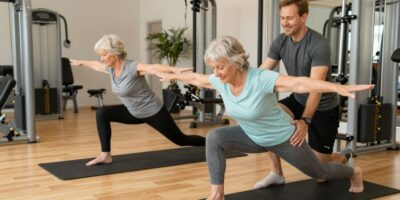
I may change the range of movement, use support, reduce resistance or choose a different position. A chair, rail or machine can provide stability while I learn, provided it is used appropriately. A trainer can help me find a version of the exercise that respects my current movement.
I avoid treating discomfort as a challenge to defeat. If a modification still feels wrong, I set that exercise aside and ask for help rather than repeatedly testing the same painful motion.
Recognizing warning signs and when to stop
I stop exercise if I feel unwell, unusually breathless, faint, confused or experience sudden or concerning pain. I move to a safe position and seek appropriate assistance. I do not try to finish a set simply because it is written on my plan.
I pay attention to symptoms that are new, worsening or do not settle as expected, and I seek healthcare guidance when needed. A calm response protects confidence better than pretending nothing happened.
Working with a qualified trainer after injury or illness
After an injury or illness, I want a trainer who is qualified for the type of support I need and willing to work within healthcare guidance. I share relevant instructions and ask how progress will be reviewed. The trainer should explain why an exercise is included and offer a clear alternative if it is unsuitable.
I also check that the program leaves room for changing energy and movement. Good coaching is not about forcing a previous routine back into place; it is about finding a sensible current one.
Maintain gym confidence over the long term
Long-term confidence is less about never feeling uncertain and more about knowing how to respond when circumstances change. I expect some weeks to be easier than others. A sustainable routine gives me ways to adjust without abandoning the larger goal of staying active and capable.
Setting short-term milestones that feel achievable
I choose milestones I can recognise within a reasonable period, such as attending regularly, learning a new machine or completing a movement with better control. I keep them specific enough to notice and modest enough to feel attainable. Reaching one provides a useful reason to set the next.
I avoid making every milestone about adding weight or doing more. Familiarity, balance, recovery and confidence are all legitimate measures of progress.
Finding accountability through friends or training partners
A friend can make the journey feel more social, while a training partner can provide a gentle reason to turn up. I agree on practical expectations, such as meeting for a walk or checking in after a session. Accountability should support me, not create guilt when plans change.
If I prefer to exercise alone, I can still tell someone when I expect to attend and share a small update afterwards. The right arrangement is the one that makes returning easier.
Handling setbacks without losing motivation
Illness, travel, family responsibilities and tiredness can interrupt a routine. When that happens, I restart at a comfortable level rather than trying to compensate for missed sessions. I ask what made the routine difficult and adjust the plan accordingly.
One poor session does not erase earlier practice. I find it helpful to keep the next step visible: pack comfortable clothes, make a short appointment or return to one familiar exercise.
Celebrating improvements in strength, balance, and independence
I pay attention to the practical changes that matter in everyday life. Perhaps I carry shopping with more control, feel steadier while turning or rise from a chair with less hesitation. These improvements may be gradual, but they can make ordinary tasks feel more manageable.
Gym confidence older adults seek is not about looking like an experienced athlete. For me, it is the growing belief that I can enter the room, choose an appropriate activity and care for my body while I do it.
Frequently Asked Questions
Is it too late to start going to the gym as an older adult?
No. I can begin at any age with an appropriate level of activity, realistic goals and suitable support. Starting gently is more useful than trying to match someone else’s routine.
What should I do if I feel embarrassed at the gym?
I can visit at a quieter time, take an orientation and arrive with a short written plan. Choosing familiar exercises and asking for help can make the setting feel less uncertain.
How often should an older adult exercise?
That depends on current fitness, health, goals and recovery. I build a routine gradually and seek professional guidance if I am unsure how much activity is appropriate.
Should I use machines or free weights first?
Either may be suitable, depending on the exercise and my ability. I begin with equipment I can use with control and ask a qualified trainer to demonstrate unfamiliar movements.
Can I exercise with joint pain or limited mobility?
Often, movement can be adapted, but the right approach depends on the cause and severity of the problem. I discuss symptoms with a healthcare professional and stop any exercise that causes concerning or worsening discomfort.
What if I miss several weeks of training?
I restart at an easier level and rebuild familiarity rather than trying to make up for missed sessions. A short, comfortable visit can restore the habit without creating unnecessary strain.
How can I tell whether my confidence is improving?
I may notice that I enter more calmly, ask questions sooner, remember the plan or try an appropriate new movement. Feeling more capable in everyday tasks is another meaningful sign of progress.
