Key Takeaways
Gym confidence for older adults usually grows through small, familiar steps rather than one dramatic change. I find that a welcoming setting, realistic goals and patient practice make exercise feel much less intimidating.
- Choose a gym where staff explain equipment clearly and respectfully.
- Begin with manageable movement and increase difficulty gradually.
- Use comfort, control and regularity as measures of progress.
- Adapt exercises around pain, mobility limits and changing energy.
- Ask a qualified professional for guidance when health concerns affect exercise.
Understand what affects gym confidence in older adults
Gym confidence older adults often need is not about becoming the fittest person in the room. It is the quiet assurance that you know what to do, can move safely and have a place in the gym. I encourage people to treat confidence as a skill that develops with experience, not as a personality trait they either have or lack.
Common concerns about starting at a gym
Many older adults worry that other people will notice their age, fitness level or uncertainty. They may also be concerned about falling, using equipment incorrectly, aggravating an old injury or not keeping up in a class. These concerns are understandable, especially if the gym feels busy or unfamiliar.
I usually suggest separating the real practical questions from the imagined judgement. You can ask where the quieter areas are, whether an instructor can demonstrate equipment and how the gym handles members who need to work at a slower pace. A good facility should make those answers easy to find.
How previous exercise experiences shape confidence
Someone who played sport or exercised regularly may still feel unsure after time away. Equally, a person with little formal exercise history may build confidence quickly once the environment feels calm and manageable. Previous experiences can influence expectations, but they do not set a permanent limit.
I prefer to start with what a person can do now rather than compare the present with an earlier decade. A short walk, a controlled sit-to-stand movement or a gentle resistance exercise can provide useful information without turning the first session into a test.
The role of balance, mobility, and health conditions
Balance, stiffness, reduced range of movement and health conditions can affect how comfortable a person feels in a gym. They may change which exercises feel appropriate, how long a session lasts and whether support is needed. I treat these factors as planning information, not reasons to feel ashamed.
If I have a health concern, a recent change in symptoms or a long period of inactivity, I seek guidance from an appropriate health professional before changing my exercise routine. That conversation can help me understand what to mention to gym staff and which movements should be modified.
Why confidence can improve with consistent practice
Familiarity reduces much of the uncertainty. After several visits, I may know where to put my belongings, which machines feel comfortable and when the gym is less crowded. Those small details free up attention for the exercise itself.
I also notice progress in ordinary actions: walking through the entrance without hesitation, adjusting a seat correctly or finishing a session feeling steady. Small wins build trust in my own ability, and that trust can make the next visit easier.
Choose a gym and program that support older adults
The right gym does more than provide equipment. It offers an atmosphere where older adults can ask questions, adjust exercises and take breaks without feeling out of place. I look for practical signs of respect rather than relying only on a facility’s advertising.
Features of an age-friendly gym
An age-friendly gym is clean, well lit and arranged so that people can move around without unnecessary obstacles. I look for equipment that is easy to adjust, clear walkways, accessible toilets and seating where I can pause. Staff presence matters too, particularly when I am learning how to use unfamiliar machines.
A suitable programme should allow different starting points. That might mean low-impact exercise, gradual resistance work, balance practice or a class with several intensity options. I want to feel that adapting an exercise is normal rather than an inconvenience.
Questions to ask during a gym tour
A tour gives me a chance to assess the atmosphere before I join. I ask who will show me the equipment, whether introductory sessions are available and how instructors support members with limited mobility. I also ask about class sizes, quieter times and the process for raising a concern.
It helps to write down questions beforehand, particularly if I feel nervous. The way staff respond is useful information: patient, specific answers suggest a more supportive environment, while rushed or dismissive replies may tell me to keep looking.
Benefits of senior fitness classes and active aging programs
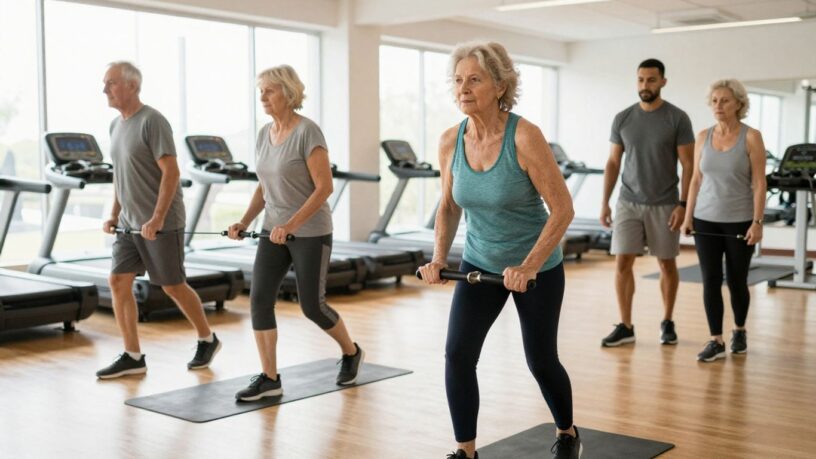
A class designed for older adults can remove some of the guesswork. The instructor may offer several versions of an exercise, allow rest breaks and explain how to use a chair or other support. The group setting can also make the first few visits feel less solitary.
I do not assume that a class is suitable simply because its name includes words such as senior or active ageing. I ask what the class involves, whether I can observe one first and how the instructor handles different abilities. A well-matched class should leave me feeling capable, not defeated.
When personal training may be helpful
Personal training can be useful when I want individual attention, need help learning equipment or feel uncertain about how to adapt movements. I would ask about the trainer’s experience with older adults and explain any relevant limitations before beginning. A first conversation should feel like a two-way assessment, not pressure to commit.
I also check that the trainer is willing to work gradually and communicate clearly. If a session leaves me confused or uncomfortable, I can say so and ask for a simpler option. The purpose is to build independence and confidence, not dependence on constant supervision.
Prepare for a comfortable first gym visit
A first visit does not need to be a full workout. I see it as an orientation: finding the entrance, learning the layout, meeting staff and trying a small amount of movement. Removing unnecessary decisions beforehand can make the experience calmer.
What to bring and what to wear
I wear comfortable clothing that allows me to move freely and shoes that feel secure. I bring water, any items the gym requires and a short list of questions. If I use glasses, hearing aids or another everyday aid, I make sure I have what helps me communicate and see the equipment clearly.
I avoid treating clothing as a test of belonging. There is no need for specialist gear at the beginning unless the facility has a particular requirement. Comfort and safe movement matter more than looking like an experienced gym member.
How to plan a manageable first session
I choose a time when I am usually alert and allow extra time for arrival. My first session might include a gentle warm-up, one or two simple exercises and an easy cool-down. I leave room for pauses, because rushing can make a new environment feel harder than it needs to be.
A useful first-session plan is deliberately modest. If I finish with energy still available, I have more information for the next visit and a positive memory of the gym. That is often more valuable than trying to prove I can do a long workout.
Learning equipment before increasing intensity
I ask staff to show me how to adjust each machine and where to place my hands or feet. I practise the movement with little or no resistance until it feels clear. I pay attention to the full motion rather than chasing a heavier setting.
I may write down the seat position or take a mental note of the adjustments that worked. Familiarity develops through repetition, so I do not expect to remember everything after one demonstration. If I am unsure, I ask again.
Using staff support without feeling embarrassed
Asking for help is part of using a gym, not evidence that I do not belong there. I can say, “Could you please show me that adjustment once more?” or “What is the easiest version of this exercise?” Clear questions usually lead to clearer support.
I also remind myself that staff are there to help people use the facility. If someone cannot answer my question, I can ask who is best placed to assist. Being prepared to speak up protects my comfort and helps me learn faster.
Build a safe and effective exercise routine
A balanced routine does not have to be complicated. I begin with movements I can control, then adjust the duration, resistance or frequency one change at a time. I pay attention to how I feel during and after exercise rather than judging the session by how exhausting it was.
Starting with walking, mobility, and light resistance
Walking is often a practical starting point because I can change the pace, distance and setting. Gentle mobility movements can help me explore how my joints feel before I add resistance. Light resistance work, using equipment or other suitable tools, can introduce strengthening without making the session overwhelming.
I keep the early stages simple. A short walk followed by a few controlled movements may be enough for one visit. When that pattern feels familiar, I can discuss sensible progressions with a qualified professional or trained instructor.
Adapting exercises for joint pain or limited mobility
Joint pain or limited mobility does not automatically mean I must stop moving, but it does mean I should pay attention to comfort and technique. I can ask whether an exercise has a seated, supported or smaller-range version. Changing the position, reducing resistance or taking more rest may make the movement more manageable.
I do not push through new, severe or worsening pain. If discomfort is confusing or continues beyond what I expect, I seek appropriate professional guidance rather than guessing. The aim is to find useful movement, not to win an argument with my body.
Using the talk test and perceived exertion
The talk test gives me a simple way to notice intensity: I ask whether I can speak in ordinary sentences while exercising. Perceived exertion adds another personal measure by asking how easy or challenging the effort feels. Neither requires a device, and both can help me avoid starting too hard.
I use these signals alongside the guidance I have been given for my circumstances. On a tired day, the same pace may feel more demanding. Adjusting the session is sensible, not a failure.
Balancing strength, cardio, flexibility, and balance training
A useful routine can include several kinds of movement. Walking or another suitable aerobic activity supports stamina, resistance exercise helps me practise strength, mobility work keeps movement varied, and balance exercises give me a chance to practise steadiness. I do not need to fit every element into every visit.
I find it easier to think across a week rather than chase a perfect individual session. A qualified instructor can help me decide how to distribute activities according to my abilities and goals. Variety also keeps the routine more interesting.
A simple weekly framework might include:
- An easy aerobic activity at a pace I can manage.
- Controlled resistance exercises with careful technique.
- Gentle mobility work for areas that feel stiff.
- Supported balance practice in a clear, safe space.
This list is a menu, not a demand. I can begin with one or two elements and build gradually as I learn what suits me.
Use practical strategies to grow gym confidence
Confidence becomes more durable when I give it something concrete to grow around. I set small targets, notice useful changes and prepare for predictable obstacles. This approach keeps the focus on participation rather than appearance.
Setting specific and realistic fitness goals
A goal such as “get fit” is difficult to measure and can feel vague. I might instead aim to attend on two planned days, learn three pieces of equipment or walk for a comfortable period. These goals are specific enough to guide me but flexible enough to adjust.
I keep the first target within reach. Once I achieve it consistently, I can choose a slightly harder next step. A goal should encourage me to return, not make every missed day feel like a personal failure.
Tracking progress beyond weight and appearance
Weight and appearance do not tell the whole story of a training routine. I can track whether I feel steadier getting out of a chair, recover more comfortably after walking or feel less uncertain when entering the gym. I can also note attendance, confidence and the exercises I have learned.
I prefer a brief record rather than an elaborate system. A few words after each visit can show patterns that I might otherwise overlook. Progress may be quiet, especially at first, but it still counts.
Handling crowded spaces and unfamiliar equipment
Crowds can make a gym feel unpredictable. I ask about quieter times, plan a route through the facility and choose a couple of backup exercises in case equipment is occupied. I can also spend part of a session in a less busy area while I become familiar with the layout.
When equipment is unfamiliar, I do not guess. I wait for staff, read the instructions provided by the gym and use a simpler movement if necessary. A pause is often safer and less stressful than rushing because someone else is waiting.
Managing self-consciousness and comparison
I cannot always prevent self-conscious thoughts, but I can decide whether they control my behaviour. Most people are focused on their own routines, and a gym is made up of people with different abilities and experience. I bring my attention back to my breathing, posture or the next manageable movement.
I also avoid comparing my beginning with someone else’s middle. My relevant comparison is how I feel now against where I started. Confidence grows when I keep returning, even if some visits are shorter or less energetic than others.
Make exercise a sustainable part of daily life
A routine works best when it fits real life. Energy, transport, family responsibilities, weather and health can all affect attendance. I plan for variation instead of expecting every week to look the same.
Creating a schedule that fits energy levels
I notice when I tend to feel most alert and place exercise near that part of the day where possible. I keep the plan visible and allow enough time to travel, change and recover. If mornings leave me sluggish, an afternoon session may be more realistic; if evenings are busy, I look for another option.
I use a minimum version for difficult days. That might mean attending briefly, walking gently or completing a few mobility exercises at home. Keeping the habit alive in a smaller form can make a full return feel less daunting.
Finding workout partners and supportive communities
A friend, neighbour or class group can make attendance more enjoyable. I look for people who respect different speeds and do not turn exercise into a competition. A supportive partner can help with practical matters such as travel, while a welcoming group can provide encouragement between sessions.
I still keep my own goals in view. Exercising with others should give me company and structure, not pressure to ignore fatigue or discomfort. The best support makes it easier to listen to myself.
Adjusting routines during illness, travel, or setbacks
Illness, travel and interruptions are normal parts of life. When I miss sessions, I avoid trying to make up for them with an overly difficult workout. I return with a smaller plan and rebuild familiarity before increasing effort.
A setback can also reveal what makes my routine fragile. I may need a home-based alternative, a different class time or a simpler travel plan. I treat that information as useful rather than seeing the interruption as proof that I cannot be consistent.
Knowing when to seek medical or professional guidance
I seek appropriate medical or professional guidance when a health condition, medication change, ongoing pain, dizziness or a recent injury could affect exercise. I explain what I want to do and ask what information I should share with gym staff. The right professional may also suggest ways to modify activity.
I stop and seek help when something feels seriously wrong or markedly different from my usual response to exercise. Gym staff can assist with immediate facility procedures, but they are not a substitute for medical assessment. Asking for guidance is one of the ways I look after my long-term ability to stay active.
Frequently Asked Questions
Is it too late to start going to a gym?
No. I can begin at any age by choosing manageable movement and increasing activity gradually. Starting later may require more planning, but it does not remove the opportunity to build strength, mobility or confidence.
What should an older adult do on the first gym visit?
I would treat the first visit as an orientation with a small amount of easy exercise. I would learn the layout, ask for equipment demonstrations and leave before fatigue makes the experience unpleasant.
How can I exercise if I have joint pain?
I can ask whether movements have supported, seated or smaller-range versions and avoid forcing painful movements. Persistent, new or worsening pain deserves discussion with an appropriate health professional.
How often should older adults exercise?
The right schedule depends on current ability, health and goals. I begin with a routine I can repeat and discuss suitable frequency and intensity with a qualified professional if I am unsure.
What if I feel embarrassed at the gym?
I can visit at a quieter time, attend an introductory session or ask staff to explain the equipment privately. Remembering that everyone starts somewhere helps me return my attention to my own progress.
Are group classes suitable for older adults?
They can be, especially when the instructor offers different versions of movements and allows rest. I check the class format, intensity and support available before joining.
When should I stop exercising and ask for help?
I stop when I experience a concerning or unusual response, particularly one that feels severe or does not settle as expected. I seek appropriate professional guidance rather than trying to diagnose the problem myself.
