Key Takeaways
Feeling confident in a gym usually comes from familiarity, realistic expectations and steady practice rather than instant bravery.
- Start with a welcoming gym, a manageable routine and clear questions for staff.
- Use short, predictable sessions to become familiar with the space.
- Choose joint-friendly movement that supports strength, balance and everyday tasks.
- Measure progress by comfort, function and consistency, not appearance alone.
- Stop when something feels unsafe and seek appropriate professional guidance.
Understand what affects gym confidence in older adults
Gym confidence older adults often have is shaped by more than fitness. I see confidence as a combination of feeling physically capable, knowing what to do and believing that the space is meant for you. Those feelings can grow gradually, even if the first visit feels awkward.
Common fears about starting or returning to a gym
A first visit can bring worries about not knowing how to use equipment, moving more slowly than other people or being judged for a changing body. Someone returning after years away may also wonder whether an old injury, stiff joints or reduced stamina will make exercise embarrassing. These concerns are understandable, but they do not predict how the visit will actually go.
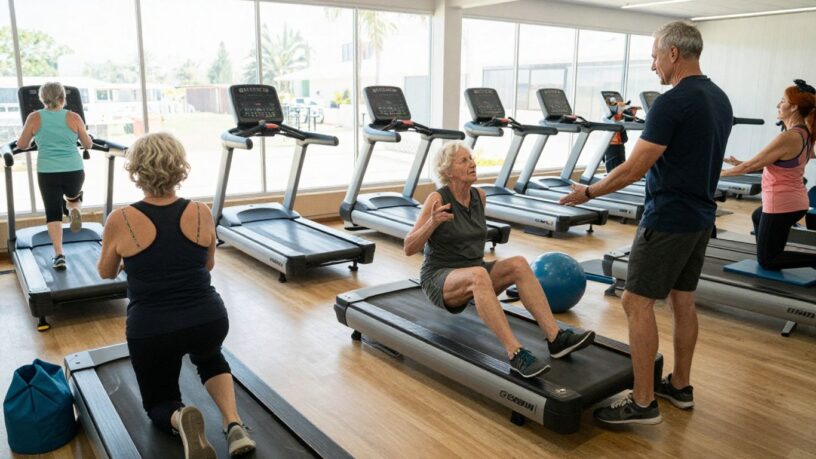
I suggest treating the first session as an orientation rather than a performance. I might walk in, say hello to reception, look around and use only one or two familiar pieces of equipment. A small, uneventful visit gives the mind a more accurate picture than anxious guessing does.
How past experiences can shape exercise confidence
A difficult experience at school, an overly intense class or a previous injury can leave a lasting impression. I may remember the discomfort more strongly than the ordinary sessions that went well, especially if I felt rushed or compared with someone else. That memory can make a new gym seem threatening before I have had a chance to assess it for myself.
I find it helpful to separate the old experience from the current plan. The equipment, instructor, body and circumstances may all be different now. I can choose a slower pace, ask for an explanation and decide that success means leaving with a positive experience, not matching anyone else.
The difference between feeling uncomfortable and being unsafe
Some discomfort is simply unfamiliarity: a busy room, a new machine or muscles working in a way I have not felt recently. Safety concerns are different. Sharp or sudden pain, dizziness, unusual breathlessness, loss of balance or feeling faint deserve attention rather than determination.
I use a simple rule: mild effort can be expected, but symptoms that feel alarming should not be pushed through. I can pause, sit or move to a safe place and tell a staff member what happened. Confidence grows more reliably when I respect those signals instead of trying to prove something.
When embarrassment, pain, or self-doubt may signal a need for support
Embarrassment is common, but persistent dread may mean I need a gentler introduction or a different setting. Pain that keeps returning, affects movement or changes how I walk also deserves professional attention. Self-doubt can be a useful prompt to ask for help rather than a reason to give up.
I might arrange an introductory session with a qualified exercise professional, bring a friend or ask the gym for a quieter time. If a health condition, medication or previous injury affects what I can do, I should discuss exercise decisions with an appropriate health professional. Support is not a sign that I am failing; it is part of making the plan fit.
Prepare before your first gym visit
Preparation removes many of the small surprises that make a gym feel intimidating. I do not need an elaborate programme before I begin, but I do benefit from knowing where I am going, what I will ask and how long I intend to stay. A little planning leaves more attention for moving comfortably.
Choosing a welcoming gym and suitable equipment
I look for a place that feels clean, calm and respectful, with staff who answer questions without making me feel foolish. The most impressive gym is not necessarily the right one. I want equipment I can approach safely, enough room to move and an atmosphere in which older adults are treated as ordinary members.
A visit before joining can tell me more than a brochure. I can check whether machines are easy to adjust, whether there are stable supports nearby and whether the layout feels manageable. If I am unsure, I can ask for a tour and explain that I am starting gently.
Questions to ask about senior programs and staff support
I prefer to ask direct questions before committing. I might ask who leads the older-adult sessions, whether staff can demonstrate equipment and how the gym handles someone who needs to modify an exercise. I can also ask about trial visits, class sizes, quieter hours and what happens if I miss a booking.
The answers reveal the culture of the gym. Clear, patient explanations are reassuring, while pressure to sign up immediately is a reason to slow down. I want support that respects my choices and does not promise more than the staff can provide.
What to wear, bring, and expect during a first visit
Comfortable clothing that allows easy movement is enough. I usually take supportive footwear, water, any membership information I need and a short note of questions. I do not need special clothing to earn a place in the room.
On a first visit, I can expect some paperwork, an introduction to the facilities and perhaps a basic discussion of my goals. I can tell the staff member that I prefer a gentle start. Knowing this beforehand helps me see the visit as a series of ordinary steps rather than a test.
How a medical checkup can guide exercise decisions
A checkup can be useful if I have been inactive, live with a health condition, take medicines that affect exercise or have concerns about pain and balance. I can ask a qualified health professional what kinds of movement may be suitable and what symptoms should prompt me to stop. That conversation can help me explain sensible boundaries to a trainer.
I should not treat general gym advice as a personal medical plan. My circumstances may call for modifications, gradual progression or extra supervision. Written guidance, where appropriate, can make the first few sessions feel clearer and safer.
Create a low-pressure plan for getting started
A low-pressure plan gives me somewhere to begin without making the gym responsible for changing everything at once. I focus on repeatable actions rather than dramatic results. The aim is to make attendance familiar enough that confidence has room to catch up.
Begin with short, predictable workouts
I might start with a brief visit that includes an easy warm-up, one or two simple activities and time to cool down. Keeping the order familiar means I spend less energy deciding what to do. If I finish feeling that I could have done a little more, I have probably left myself a useful reason to return.
I write the plan down before I arrive. It could include walking or another comfortable cardio option, a small amount of strength work and a gentle mobility exercise. The details can change, but the predictable shape of the session makes the environment less mysterious.
Set process goals instead of appearance-based goals
Appearance goals can be uncertain and emotionally tiring, particularly when they become the only measure of success. I prefer goals I can act on, such as attending on a planned day, learning how to adjust a machine or completing a warm-up without rushing. These goals give me evidence that I am building a habit.
A useful process goal might be to greet a staff member, try one new piece of equipment or notice how I feel after moving. I can record these small wins without turning exercise into a competition. Small actions build trust between me and my body.
Use a simple warm-up and cool-down routine
I begin with gentle movement that prepares me for the session, such as an easy walk or comfortable joint movements. The warm-up should feel gradual rather than tiring. I pay attention to how my body responds before I add any effort.
Afterwards, I slow down and allow my breathing to settle. Gentle mobility work may help me leave feeling less hurried, though I avoid forcing a stretch or bouncing into a position. A familiar beginning and ending can make the entire visit feel more contained.
Build confidence through consistent attendance
Confidence tends to come from repeated experiences of managing the gym, not from waiting until I feel completely ready. I choose a schedule that fits my life and energy rather than one that sounds impressive. Even a shorter visit counts when it helps establish continuity.
If I attend at a similar time, I may begin to recognise staff, rooms and routines. Familiarity reduces the number of decisions I need to make. Over time, I can adjust one part of the plan while keeping the rest steady.
Choose exercises that build strength and comfort
I choose exercise for what it helps me do in daily life: stand from a chair, carry groceries, climb steps, reach comfortably and feel steadier. A balanced routine can include cardiovascular movement, strength and mobility, but it does not need to be complicated. I start with activities I can perform with control.
Beginner-friendly cardio options
Walking on a treadmill, using a stationary bike or moving in a low-impact class may offer approachable ways to raise my heart rate. I select the option that feels stable and easy to adjust. If I am new to exercise, I begin at a pace where I can still speak comfortably, unless a qualified professional has given me different instructions.
I keep the first sessions modest and notice how I feel during and afterwards. The best choice is not the one that looks hardest; it is the one I can repeat without undue strain. Staff can show me how to set up equipment and stop it safely.
Strength exercises for balance and everyday movement
Strength work can support ordinary tasks when it is performed with controlled technique. I may begin with supported sit-to-stands, light resistance exercises or machines that allow the movement to be guided. I use a stable surface nearby when balance is a concern and ask for help with setup.
A compact starting sequence might include:
- Sitting down and standing up from a stable chair with control.
- A supported heel raise while holding a secure surface.
- A light pulling movement using suitable equipment.
- A gentle pushing movement with a comfortable range.
These are examples to discuss with a qualified professional, not a personal prescription. I concentrate on smooth movement and breathing rather than lifting as much as possible. The exercises should support confidence in daily movement, not leave me feeling defeated.
Mobility work for flexibility and joint comfort
Mobility work is about moving joints through a comfortable range, not forcing flexibility. I might use slow shoulder circles, ankle movements or gentle trunk turns if they suit me. I keep the motion controlled and stop before pain becomes sharp or concerning.
I find mobility work particularly useful at the beginning or end of a session because it encourages me to notice how I am moving. It can also highlight a limitation worth discussing with a health professional. Comfort is a better guide than trying to copy someone else’s range.
How to adjust exercises for health conditions or limitations
An exercise can often be changed by reducing resistance, shortening the range, adding support, slowing the pace or choosing a different position. I tell the instructor what affects my movement rather than quietly struggling. That gives them a chance to offer a suitable modification.
I avoid assuming that a general exercise is appropriate for every body. Joint symptoms, balance concerns, fatigue, recent surgery and other health factors may change the safest approach. Professional guidance helps me adapt without losing the benefits of regular movement.
Make the gym environment feel more comfortable
The social side of a gym can matter as much as the equipment. I feel more at ease when I know whom to ask, where to put my belongings and how to move through the space without getting in anyone’s way. Small routines turn an unfamiliar room into a place I understand.
Work with a qualified trainer or exercise professional
A good trainer listens before demonstrating anything. I look for someone who asks about my experience, limitations and goals, then explains why an exercise has been chosen. I should feel able to request a slower explanation or say that a movement does not feel right.
I can also ask about the professional’s qualifications and experience working with older adults. The relationship should be collaborative, not based on pressure or exaggerated promises. I remain responsible for communicating how I feel during the session.
Attend quieter hours or older-adult fitness classes
A quieter time may give me more space to learn equipment without feeling watched. I can ask reception when the gym is usually less busy and visit once before choosing a regular time. Some people prefer a class designed for older adults because the pace and examples feel more relevant.
I still need to judge whether a class suits my current ability. I can observe one first, speak with the instructor and ask how movements are modified. A welcoming class does not require everyone to move in exactly the same way.
Use a workout buddy or supportive group
A friend can make the first visit easier by sharing the practical details, such as where to meet and what to bring. I choose someone patient who will not push me past my comfort level. We can attend together while still following separate, appropriate routines.
A supportive group can offer encouragement and a sense of belonging, but I do not need to be highly social to benefit. A brief greeting or familiar face may be enough at first. I let connection develop at its own pace.
Learn basic gym etiquette and equipment routines
I keep walkways clear, wipe equipment according to the gym’s instructions and return adjustable items when I have finished. I allow others to use equipment between sets and ask before interrupting someone who is exercising. These ordinary habits help me feel like a capable member rather than a visitor who might do something wrong.
I also learn how to adjust seats, select a light starting resistance and stop a machine safely. If I cannot work out a setting, I ask. There is no prize for pretending to understand equipment that has not yet been explained.
Track progress and handle setbacks safely
Progress is often quieter than I expect. I may notice that I am less hesitant at reception, recover more comfortably after a session or manage a daily task with greater ease. I record useful observations without turning every workout into a judgement about my body.
Signs that a workout is appropriately challenging
An appropriate session usually leaves me feeling that I have worked, but not overwhelmed. I look for controlled movement, steady breathing appropriate to the activity and enough energy to complete the planned exercises without rushing. I should be able to maintain safe technique rather than compensating as fatigue builds.
The right level can vary from day to day. Poor sleep, stress or a flare-up of symptoms may mean I need to reduce the plan. I treat that adjustment as sensible training, not a lack of willpower.
Ways to measure progress beyond weight and appearance
I can track how often I attend, how confidently I set up equipment and whether everyday movements feel more manageable. Other useful observations include balance, stamina, range of comfortable movement and how quickly I feel ready for ordinary activities afterwards. None of these needs to be reduced to a single score.
I keep notes brief so that tracking remains helpful. A date, the activities I completed and one sentence about how I felt may be enough. Looking back over several weeks can reveal progress that is easy to miss from one session to the next.
What to do after missed workouts or discouraging sessions
Missing a session does not erase the sessions that came before it. I ask what got in the way, then make the next step smaller if necessary. That might mean returning for a short visit, repeating a familiar routine or contacting the gym with a practical question.
After a discouraging session, I avoid making a permanent decision while I am still disappointed. I write down what felt difficult and what might be changed. A different time, exercise, explanation or level of support may turn the next experience into a more useful one.
When to stop exercising and seek professional advice
I stop if I experience concerning pain, dizziness, faintness, unusual breathlessness, chest symptoms, sudden weakness or a loss of coordination. I move somewhere safe and tell gym staff what has happened. If symptoms are severe or urgent, I seek immediate medical help rather than trying to diagnose the cause myself.
For recurring pain, unusual fatigue or uncertainty about a health condition, I speak with an appropriate health professional before changing my routine. A trainer can help with exercise technique, but cannot replace medical assessment. Listening early is one of the most practical forms of self-care.
Frequently Asked Questions
How can older adults build gym confidence?
I recommend starting with short visits, a simple plan and a welcoming support person. Repeating manageable sessions helps the gym become familiar, which usually feels more useful than trying to act confident from the beginning.
Is it too late to start going to a gym?
It is not too late to explore movement at an appropriate level. I would start gradually, choose activities that feel manageable and seek guidance when a health condition, pain or balance concern affects my decisions.
What should I do on my first gym visit?
I can introduce myself, ask for a tour, learn how to adjust one or two pieces of equipment and complete a gentle session. Keeping the visit short gives me time to learn without making the first day feel overwhelming.
How often should older adults exercise at a gym?
There is no single schedule that suits everyone. I choose a frequency I can maintain around my health, energy and other commitments, then adjust it with appropriate professional guidance if needed.
What exercises are suitable for beginners?
Many beginners start with comfortable walking or cycling, simple supported strength movements and gentle mobility work. The right choices depend on my abilities, symptoms and experience, so I ask a qualified professional when I am unsure.
How can I exercise if I feel self-conscious?
I can visit during a quieter period, bring a supportive friend, attend a suitable class or ask staff to explain the equipment privately. Focusing on one small task at a time helps reduce the feeling that everyone is watching.
When should I stop a workout?
I stop when movement becomes unsafe or I experience concerning symptoms such as sudden pain, dizziness, faintness or unusual breathlessness. I tell staff and seek appropriate professional advice rather than pushing through uncertainty.
